


If you are looking for Brookfield apartments with public transportation access in 77069, the short answer is yes: Brookfield lists access to public transportation among its community amenities, and its address on Wunderlich Drive places it in an established part of northwest Houston where many renters rely on a mix of bus service, driving, and rideshare rather than rail. The important question is not just whether transit exists nearby, but whether the specific route, stop location, frequency, and first or last trip match your real schedule.
That matters because transit access in outer Houston neighborhoods is usually more about day to day practicality than about having a station at the front door. A route can look close on a map and still be a poor fit if it does not run when you start work, if weekend service is thinner, or if your destination requires multiple transfers.
How to judge whether transit access here will actually work for you
Start with the destination, not the apartment. The most useful first step is to plug Brookfield’s address, 14230 Wunderlich Drive, Houston, TX 77069, into METRO’s trip planner or a live mapping app, then test the exact places you go most often: work, school, a park and ride, a grocery store, or a recurring medical appointment. Check those trips at the actual times you travel, such as 6:30 a.m., 8:00 a.m., 5:30 p.m., and Saturday midday, because transit usefulness can change sharply by time of day.
Next, verify the walking portion of the trip. In many Houston neighborhoods, the quality of transit access is shaped as much by the walk to the stop as by the route itself. Look for whether the route to the stop uses major intersections, whether there are sidewalks for the full approach, and whether you would be crossing busy roads such as FM 1960 or other heavily traveled corridors in the area. A short walk on paper is not always a comfortable or predictable walk in practice.
Also check whether your likely trip uses local bus service only, or whether you would need to connect to a park and ride or another transfer point to reach larger employment centers. Northwest Houston commuters often find that one-seat trips are limited, while transfer-based trips can still work well if timing lines up. If your destination is Downtown, the Texas Medical Center, or another major hub, the reliability of that transfer can matter more than the initial proximity to a stop.
Finally, use live schedule tools instead of a static map screenshot. METRO schedules and stop patterns can change, and temporary construction or detours can affect service. Before you lease anywhere based on transit, check the current route page, the real-time arrival feed, and street-view imagery for the exact stop you expect to use. That is the best way to confirm whether the transit access is merely present or genuinely useful.
What transit access in 77069 usually means for daily life
The 77069 area is part of northwest Houston, where most errands and commutes still tend to be road-based. That does not make transit irrelevant, but it does mean riders should expect a different pattern than in denser inner-loop neighborhoods. Service is often strongest along larger arterials, and many residents combine bus trips with driving, carpooling, or occasional rideshare for parts of the week.
For some renters, that is completely workable. If your schedule is regular, your destination sits on or near a frequent corridor, and you are comfortable planning around a timetable, living in this part of Houston with transit access can reduce how often you need a car. It can also help a two-person household that wants one vehicle instead of two, especially if one resident drives and the other uses transit for selected trips.
For other renters, the trade-off is flexibility. If you work late nights, start very early, make multiple stops after work, or regularly carry groceries, school materials, or child gear, the difference between “access to transit” and “easy transit commuting” becomes more significant. In that situation, you should test not just your main commute but also the backup trip home, the Saturday errand run, and the return trip after dark.
That is also where a community’s non-transit features can still matter to the decision. Brookfield offers covered assigned parking, gated access, and guest parking, which may be useful if your household expects to combine transit with driving or occasional pickups. The property also lists easy access to shopping, which is worth evaluating on a map against your actual stores so you can see whether errands are realistic on foot, by bus, or mostly by car.
Why Brookfield may suit renters who want transit as part of a mixed transportation plan
Brookfield is most likely to make sense for renters who do not need rail-adjacent urban transit, but do want the option to use public transportation for selected trips in 77069. Because the community specifically advertises access to public transportation, it is reasonable to ask the leasing team which nearby stops residents commonly use, then independently confirm those stops and routes through METRO. That combination, on-site confirmation plus your own route check, is more reliable than assuming all “transit access” means the same thing from one property to another.
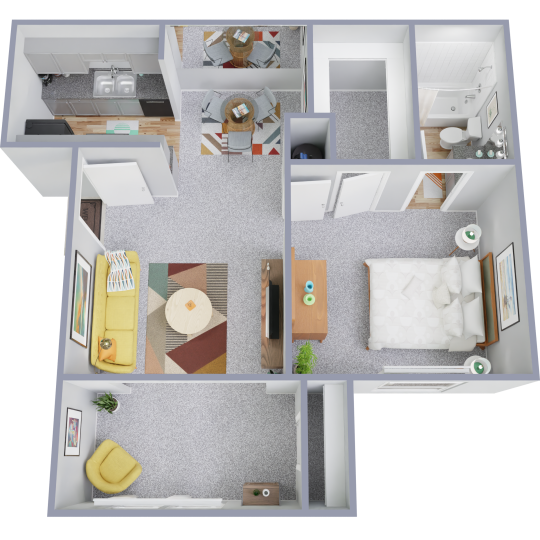
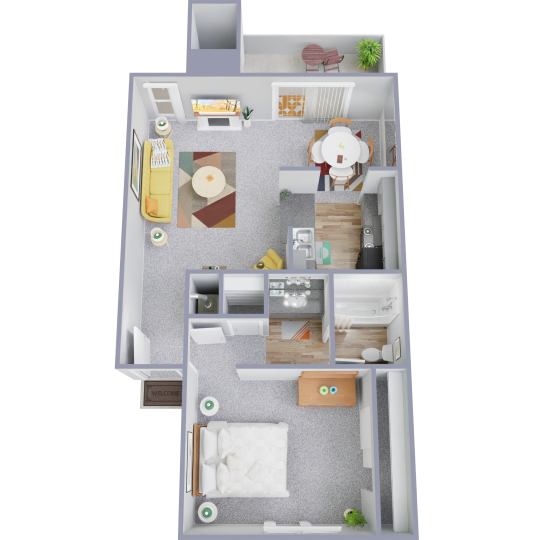
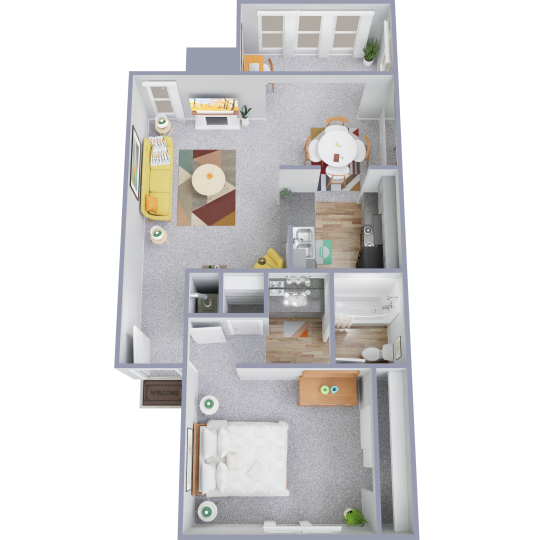
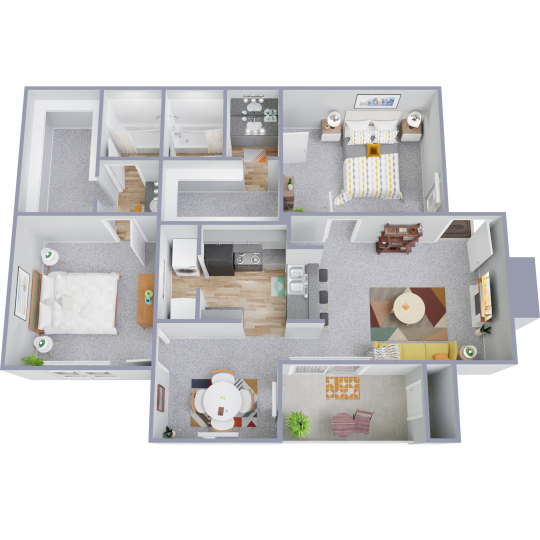
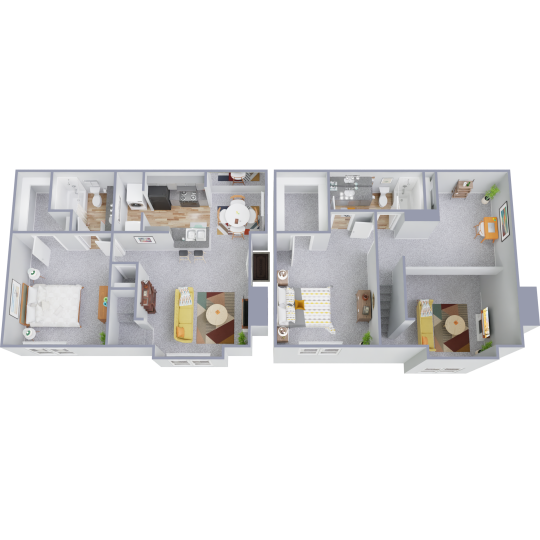
The apartment mix may also matter if part of your transit decision involves working or studying from home on some days. Brookfield offers one- and two-bedroom layouts, including an A5 with Study, and some homes have a den or study in select units that should be confirmed for the specific apartment. For a renter who only commutes by transit part of the week, that kind of extra workspace can be more useful than shaving a few minutes off a trip that only happens occasionally.
There is a practical lifestyle angle as well. If you expect to alternate between bus trips, remote work, and driving, features such as two laundry facilities, on-call maintenance, and a pool or outdoor common space may not determine your decision, but they can support the day to day routine of spending more time near home. The key is to treat those features as secondary. First confirm that your transportation pattern works, then decide whether the community itself fits how you live.
A sensible next step is to map two or three of your real trips from Brookfield’s address, then visit the property and physically look at the stop, the walking route, and the surrounding streets at the same time of day you would normally travel. If the route works on an ordinary Tuesday, not just in theory, you will have a much clearer answer than any general claim about transit access can provide.